Red fox
Vulpes vulpes (Linnaeus, 1758)
The red fox (Vulpes vulpes) is a species in the family Canidae, order Carnivora. Recorded adults live up to 5 years. It has been recorded in 91 countries, most often in Switzerland, Spain and France. Its IUCN Red List status is Least Concern.
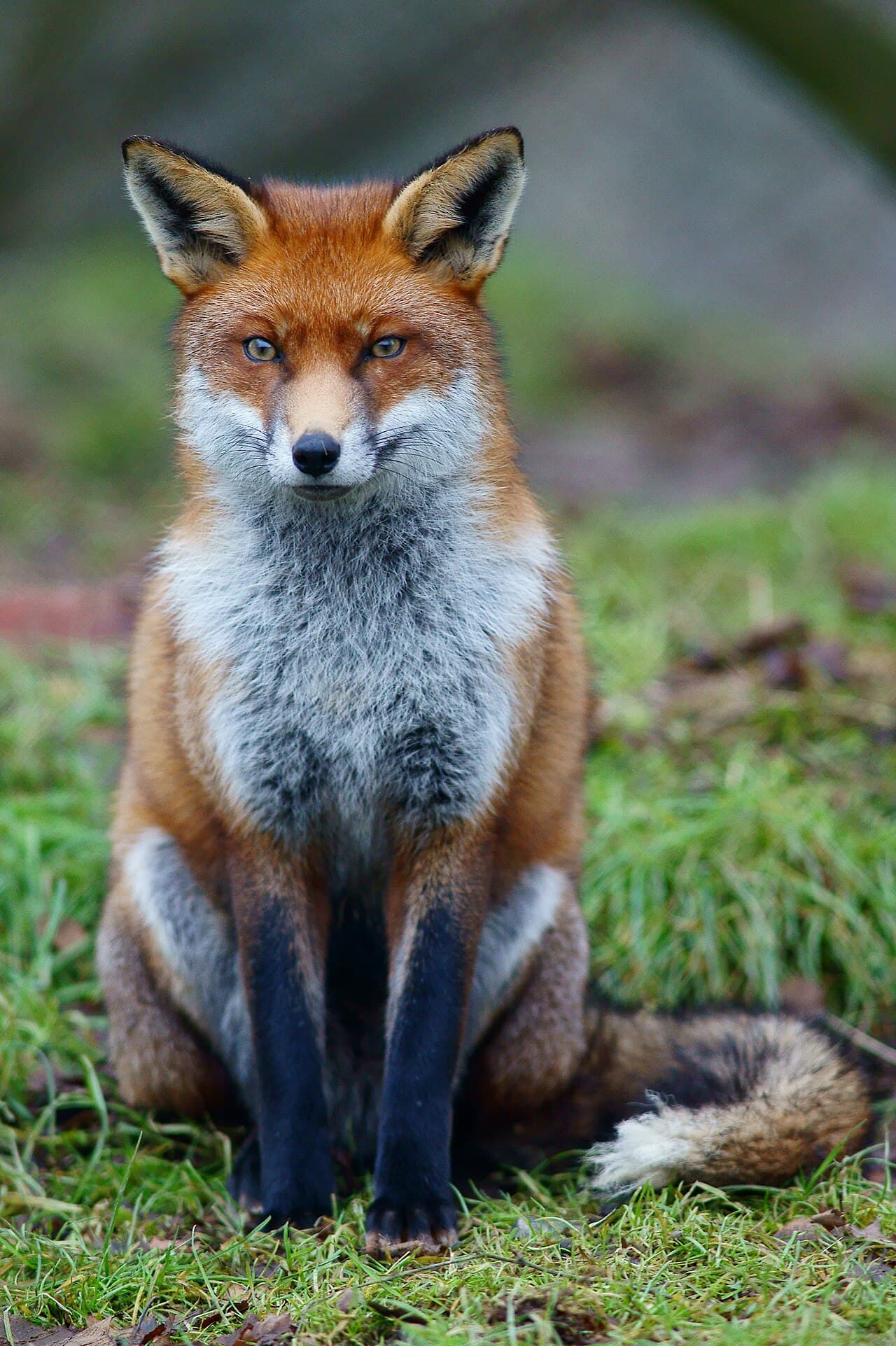

Quick facts about the red fox
- Weight
- Not recorded
- Length
- Not recorded
- Height
- 42.5 cmsrc for Height
- Lifespan
- 5 yearssrc for Lifespan
- Main food
- Oryctolagus, fruitsrc for Main food
- Habitat
- forest, grassland, shrubland, desert, wetland, urban areasrc for Habitat
- Gestation
- 52 dayssrc for Gestation
- Young per litter or clutch
- Not recorded
- Conservation status
- Least Concern (IUCN)src for Conservation status
- Recorded in
- 91 countriessrc for Recorded in
How big is the red fox?
Photos of the red fox
Only freely licensed photos are shown. Each carries its creator and licence.


Where does the red fox live?
Countries with openly licensed sighting records on GBIF. This shows where the species has been recorded, including zoos and introduced populations. It is not a definitive range.
The red fox has been recorded in 91 countries, from 1,589,818 records.
- None on record
- 1–9
- 10–99
- 100–999
- 1,000+
The same figures as a list, most records first
- Switzerland521,388
- Spain455,814
- France238,771
- Australia120,793
- United Kingdom68,867
- Sweden34,143
- Germany33,794
- Norway21,333
- Denmark17,721
- Belgium14,313
- Luxembourg11,132
- United States10,053
- Ireland5,816
- Finland5,348
- Japan4,553
- Netherlands3,885
- Portugal3,253
- Canada2,879
- Ukraine2,429
- Estonia2,224
- Russia1,879
- Italy1,561
- Israel1,453
- Austria1,312
- Poland688
- Czechia456
- Egypt368
- Algeria361
- Romania349
- Türkiye283
- Iran272
- China243
- Liechtenstein235
- Greece187
- Montenegro156
- Cyprus150
- India146
- Croatia110
- Serbia90
- Lithuania76
Show 51 more countries
- Morocco76
- Tunisia69
- Pakistan68
- Bulgaria61
- Afghanistan56
- Mongolia51
- Armenia49
- Slovenia41
- Hungary39
- Saudi Arabia38
- Åland Islands32
- Andorra25
- Oman24
- Slovakia24
- Belarus22
- Kazakhstan21
- Bosnia & Herzegovina20
- Nepal20
- Georgia18
- Iraq18
- St. Pierre & Miquelon18
- Uzbekistan18
- Latvia15
- United Arab Emirates10
- Jordan10
- Lebanon10
- Syria10
- Albania9
- North Macedonia9
- Kosovo6
- Libya5
- Palestinian Territories5
- Sudan5
- South Korea4
- Kuwait4
- Tajikistan4
- Djibouti3
- Yemen3
- Kyrgyzstan2
- Azerbaijan1
- Bhutan1
- Greenland1
- Gambia1
- Hong Kong SAR China1
- Iceland1
- Moldova1
- Namibia1
- Réunion1
- Senegal1
- Vietnam1
- South Africa1
What is the red fox?
The red fox (Vulpes vulpes) is the largest of the true foxes, and the most widely distributed member of the order Carnivora. It is present across the entire Northern Hemisphere, including most of Europe, Asia, and North America, as well as parts of North Africa. Its range has expanded alongside human settlement, with the species having been introduced into Australia, where it preys on native small and medium-sized rodents and marsupials. The red fox is listed as of Least Concern on the IUCN Red List. Because of its impact on native species, it is included on the list of the "world's 100 worst invasive species".
The red fox originated in Eurasia during the Middle Pleistocene 400,000,000 years ago and later colonised North America sometime prior to 130,000,000 years ago. Apart from its large size, the red fox is distinguished from other species of foxes by its ability to adapt quickly to new environments. Despite its name, the species often produces individuals with other colours, including melanistic and leucistic ones. Forty-six subspecies are currently recognised, which can be divided into two categories: the large northern foxes and the small, basal southern grey desert foxes of North Africa and Asia.
The red fox usually occurs in pairs or in small family groups consisting of a mated pair and their young, or a male with several females related to each other. The young of the mated pair stay with their parents to help care for the new kits. The red fox primarily feeds on small rodents, though it also hunts rabbits, squirrels, game birds, reptiles, invertebrates and young ungulates. It also eats fruit and vegetables. Although it tends to kill smaller predators, including other species of foxes, it is itself vulnerable to attacks from predators, such as the golden eagle, the Eurasian goshawk, Bonelli's eagle, the Eurasian eagle-owl, the long-tailed weasel, the stoat, the striped skunk, the American mink, snakes, and martens.
The red fox has been extensively hunted as a pest and fur-bearer for many centuries, and is represented in human folklore and mythology. Due to its widespread distribution and large population, the red fox is one of the most important fur-bearing animals harvested for the fur trade. Too small to pose a significant threat to humans, it has greatly benefited from the presence of human habitation, and has successfully colonised many suburban and urban areas. The domestication of the red fox is also underway in Russia, and has resulted in the domesticated silver fox (Vulpes vulpes forma amicus).
Wikipedia contributors, “Red fox”, Wikipedia (revision 1384783618), retrieved 2026-11-11. Shared under CC BY-SA 4.0; this block is kept separate from our own text.
What does the red fox sound like?
Is the red fox endangered?
The red fox is listed as Least Concern on the IUCN Red List: it is not currently at risk of extinction.
- LCLeast Concern
- NTNear Threatened
- VUVulnerable
- ENEndangered
- CRCritically Endangered
- EWExtinct in the Wild
- EXExtinct
Category via Wikidata (CC0). Find the full assessment on the IUCN Red List. See all Least Concern species.
How is the red fox classified?
- kingdomAnimalia
- phylumChordata
- classMammalia
- orderCarnivora
- familyCanidae
- genusVulpes
- SpeciesVulpes vulpes (Linnaeus, 1758)
Synonyms Canis vulpes, Vulpes palmaria
Names in other languages (18)
- renard rouxFrench
- RotfuchsGerman
- raposa-vermelhaPortuguese
- gewone vosDutch
- rödrävSwedish
- アカギツネJapanese
- 赤狐Chinese
- ثعلب أحمرArabic
- Mbweha MwekunduSwahili
- обыкновенная лисицаRussian
- Silver foxEnglish
- Cross foxEnglish
- FoxEnglish
- European foxEnglish
- zorroSpanish
- zorro rojoSpanish
- vosDutch
- الثعلب الأحمرArabic
GBIFWikidataWikipediaNCBI TaxonomyITISEncyclopedia of LifeiNaturalistWoRMS
Relatives of the red fox
Other species in the same family Canidae.
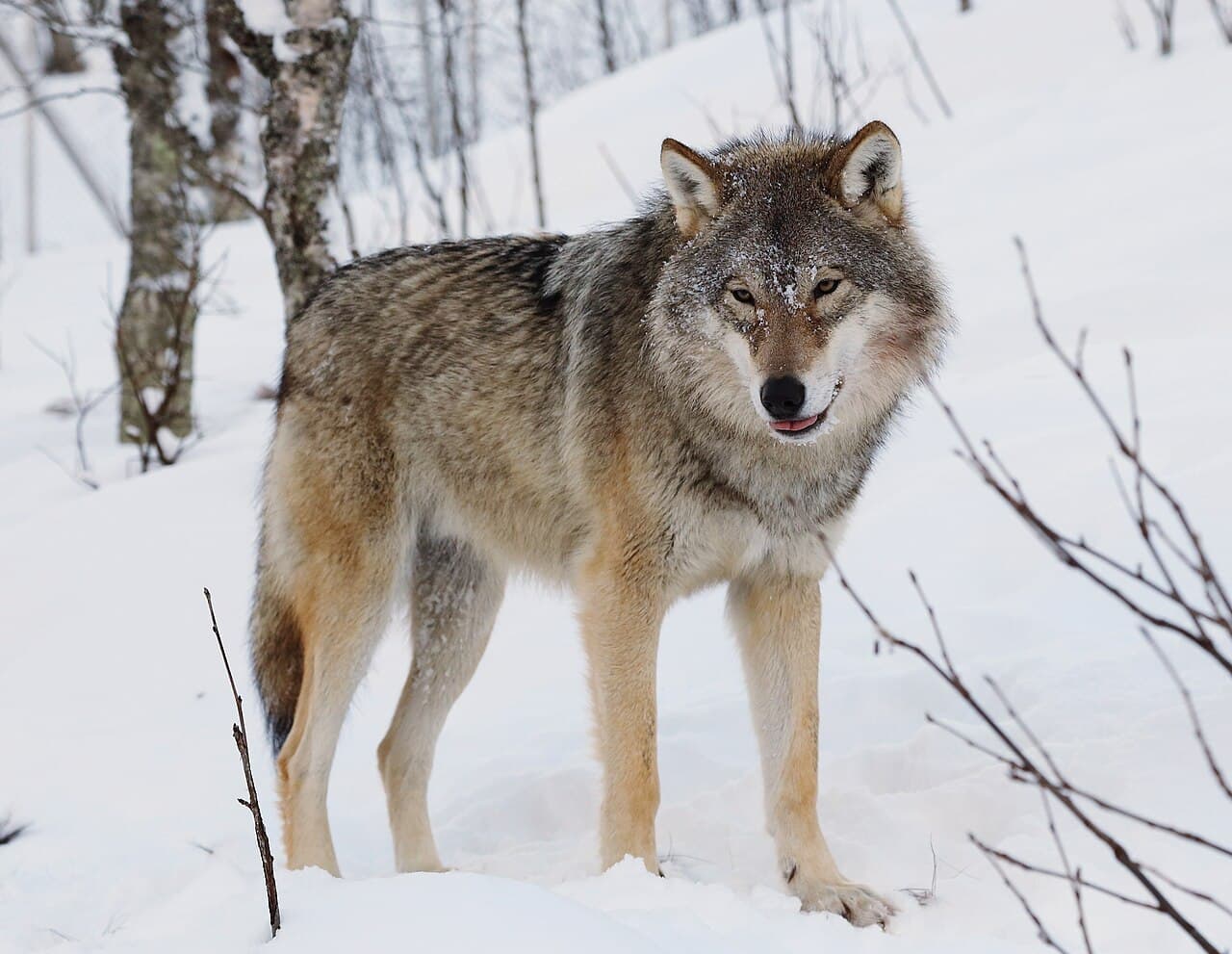
Grey wolf
Canis lupus
CompareRed fox vs Grey wolf
Common questions
Answered only where our data holds the answer.
How big is the red fox?
An adult red fox stands 42.5 cm tall, according to values recorded on Wikidata.
Where does the red fox live?
The red fox has openly licensed sighting records from 91 countries on GBIF. The most records come from Switzerland, Spain, France, Australia and United Kingdom. These are recorded sightings, not a definitive range.
Is the red fox endangered?
The red fox is listed as Least Concern on the IUCN Red List, meaning it is not currently at risk of extinction.
What does the red fox eat?
Its recorded main food is Oryctolagus and fruit.
How long does the red fox live?
The red fox has a recorded lifespan of 5 years.
How long is the red fox pregnant?
The recorded gestation period is 52 days.
What kind of animal is the red fox?
The red fox (Vulpes vulpes) belongs to the family Canidae in the order Carnivora.
Sources and how to cite this page
Data as of 2026-11-11. How this page is put together.
- GBIF Backbone Taxonomy · CC BY 4.0 · live API 2026-11-11
GBIF Secretariat. GBIF Backbone Taxonomy. Checklist dataset https://doi.org/10.15468/39omei accessed via GBIF.org. - Wikidata · CC0 1.0 · live API 2026-11-11
Wikidata contributors. Wikidata, the free knowledge base. - GBIF occurrence aggregates (CC0 and CC BY records only) · CC BY 4.0 · live API 2026-11-11
GBIF.org occurrence search, country facet counts restricted to CC0 1.0 and CC BY 4.0 records. - Wikimedia Commons · Per file · live API 2026-11-11
Wikimedia Commons contributors. Licence and creator recorded per file. - English Wikipedia · CC BY-SA 4.0 · live API 2026-11-11
Wikipedia contributors. Wikipedia, The Free Encyclopedia.
Embed a card for this animal on your own site
Copy this code. The card shows the photo with its credit, key facts and a link back to this page.
CreatureData. (2026). Red fox (Vulpes vulpes). Retrieved from https://creaturedata.com/animals/red-fox
“Red fox (Vulpes vulpes).” CreatureData, 2026, https://creaturedata.com/animals/red-fox.
@misc{red_fox_2026,
  title = {Red fox (Vulpes vulpes)},
  author = {{CreatureData}},
  year = {2026},
  url = {https://creaturedata.com/animals/red-fox},
  note = {Data as of 2026-11-11}
}