Grey wolf
Canis lupus Linnaeus, 1758
The grey wolf (Canis lupus) is a species in the family Canidae, order Carnivora. It has been recorded in 168 countries, most often in Australia, France and Switzerland. Its IUCN Red List status is Least Concern.
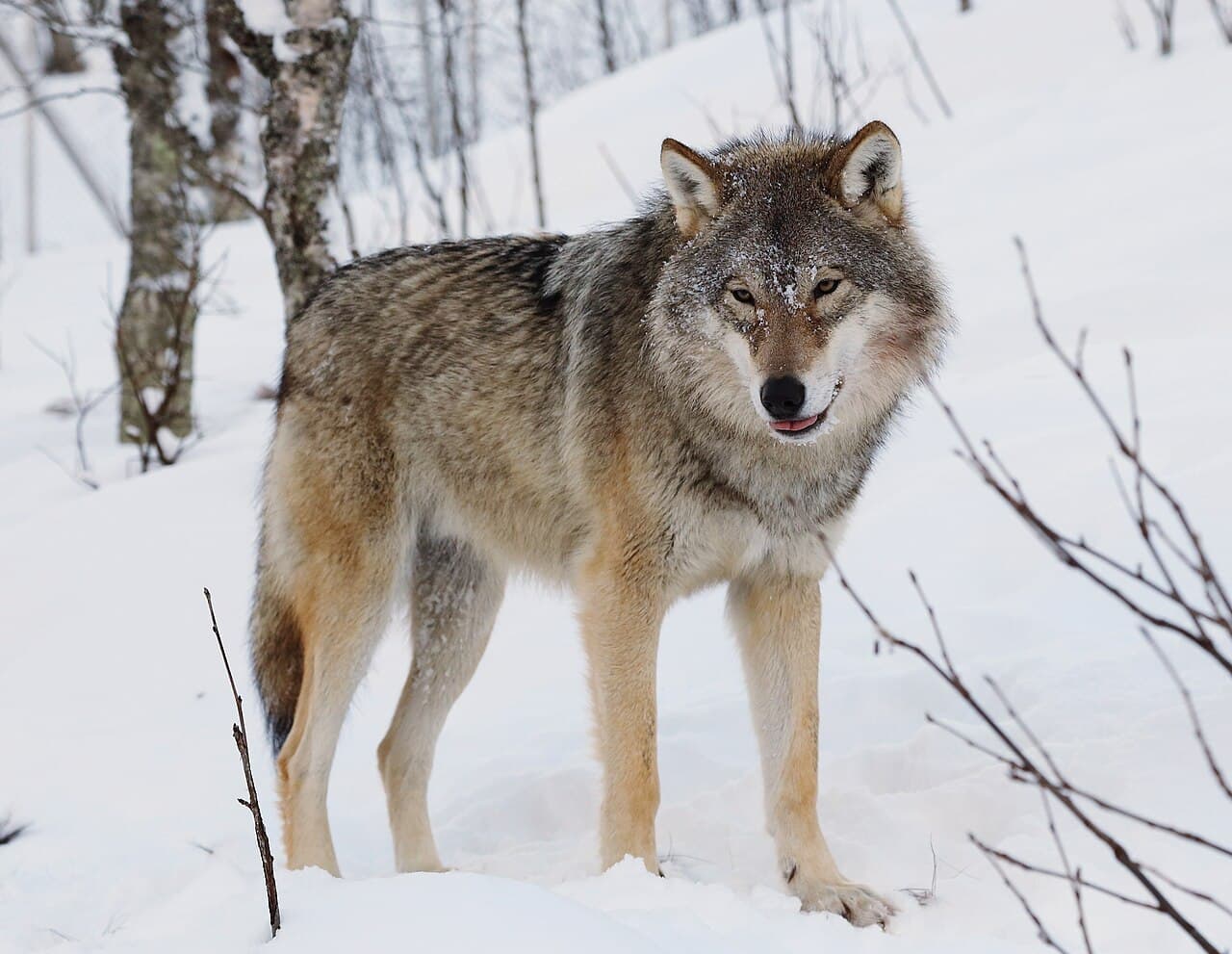

Quick facts about the grey wolf
- Weight
- Not recorded
- Length
- Not recorded
- Lifespan
- Not recorded
- Main food
- Poponejo, Lepus europaeus, moose, Bison, carrion, Rangifer tarandus and 30 moresrc for Main food
- Habitat
- Not recorded
- Gestation
- 62 dayssrc for Gestation
- Young per litter or clutch
- 6src for Young per litter or clutch
- Conservation status
- Least Concern (IUCN)src for Conservation status
- Recorded in
- 168 countriessrc for Recorded in
Where does the grey wolf live?
Countries with openly licensed sighting records on GBIF. This shows where the species has been recorded, including zoos and introduced populations. It is not a definitive range.
The grey wolf has been recorded in 168 countries, from 169,120 records.
- None on record
- 1–9
- 10–99
- 100–999
- 1,000+
The same figures as a list, most records first
- Australia48,879
- France46,019
- Switzerland15,115
- Norway12,833
- United States9,608
- Germany3,813
- Canada3,752
- Belgium2,985
- Mexico2,614
- United Kingdom2,074
- Spain1,615
- Denmark1,584
- Sweden1,497
- Portugal1,494
- Italy1,292
- Ukraine1,119
- Brazil1,064
- Netherlands1,060
- Colombia966
- Russia912
- Finland851
- Estonia667
- Luxembourg588
- Japan576
- Chile528
- India510
- Israel382
- Türkiye367
- Greenland361
- Thailand276
- Austria263
- Poland245
- China208
- Egypt179
- Taiwan154
- Iran139
- Vietnam116
- Ecuador109
- Argentina103
- Indonesia100
Show 128 more countries
- Kenya93
- Nepal90
- Réunion83
- Peru79
- Romania77
- Algeria70
- South Africa67
- Georgia59
- Armenia57
- Croatia57
- Grenada53
- Kosovo53
- Suriname51
- Nicaragua47
- Belarus44
- Belize44
- Greece40
- Iraq33
- Puerto Rico32
- Gambia31
- Montenegro31
- Malaysia31
- Mongolia30
- Philippines29
- Papua New Guinea27
- Madagascar26
- Morocco25
- New Zealand25
- Sri Lanka24
- Pakistan24
- Slovakia24
- Costa Rica23
- Venezuela23
- Zimbabwe23
- Guam22
- Bulgaria21
- Jordan21
- Afghanistan20
- Hong Kong SAR China20
- Serbia19
- Paraguay17
- Saudi Arabia16
- Albania15
- Guatemala14
- Cuba13
- Honduras12
- Malawi12
- Czechia11
- Antarctica10
- Bosnia & Herzegovina10
- Singapore10
- Uzbekistan10
- Samoa10
- Cyprus9
- Ethiopia9
- Tanzania9
- Bolivia8
- Lebanon8
- Lithuania8
- Latvia8
- North Macedonia8
- Oman8
- Iceland7
- Panama7
- French Polynesia7
- El Salvador7
- Bangladesh6
- Congo - Kinshasa6
- Dominican Republic6
- Hungary6
- South Korea6
- Moldova6
- Sudan6
- Wallis & Futuna6
- Cape Verde5
- French Guiana5
- Liechtenstein5
- Mauritius5
- Uganda5
- Mayotte5
- Aruba4
- Ghana4
- Guadeloupe4
- Kazakhstan4
- Laos4
- St. Martin4
- Martinique4
- Namibia4
- New Caledonia4
- Nigeria4
- Slovenia4
- Tajikistan4
- Trinidad & Tobago4
- Azerbaijan3
- St. Barthélemy3
- Jamaica3
- Kyrgyzstan3
- Kiribati3
- Montserrat3
- St. Pierre & Miquelon3
- Solomon Islands3
- Bahrain2
- Ireland2
- Kuwait2
- Cayman Islands2
- Liberia2
- Palestinian Territories2
- Palau2
- Rwanda2
- Syria2
- Uruguay2
- U.S. Virgin Islands2
- United Arab Emirates1
- Angola1
- Åland Islands1
- Central African Republic1
- Dominica1
- Western Sahara1
- Guinea-Bissau1
- Lesotho1
- Myanmar (Burma)1
- Malta1
- San Marino1
- Senegal1
- South Sudan1
- Chad1
- Tunisia1
- St. Vincent & Grenadines1
What is the grey wolf?
The wolf (Canis lupus; pl.: wolves), also known as the grey wolf or gray wolf, is a canine native to Eurasia and North America. More than thirty subspecies of Canis lupus have been recognized, including the dog and dingo, though grey wolves, as popularly understood, include only naturally occurring wild subspecies. The wolf is the largest wild extant member of the family Canidae, and is further distinguished from other Canis species by its less pointed ears and muzzle, as well as a shorter torso and a longer tail. The wolf is nonetheless related closely enough to smaller Canis species, such as the coyote and the golden jackal, to produce fertile hybrids with them. The wolf's fur is usually mottled white, brown, grey, and black, although subspecies in the Arctic region may be nearly all white.
Of all members of the genus Canis, the wolf is most specialized for cooperative game hunting, as demonstrated by its physical adaptations to tackling large prey, its more social nature, and its highly advanced expressive behaviour, including individual or group howling. It travels in nuclear families, consisting of a mated pair accompanied by their offspring. Offspring may leave to form their own packs at the onset of sexual maturity and in response to competition for food within the pack. Wolves are also territorial, and fights over territory are among the principal causes of mortality. A carnivore, the wolf is an apex predator that feeds on large wild hooved mammals as well as smaller animals, livestock, carrion, and garbage. Single wolves or mated pairs typically have higher success rates in hunting than do large packs. Pathogens and parasites, notably the rabies virus, may infect wolves.
The global wild grey wolf population is estimated to be between 200,000 and 250,000 individuals as of 2026 and has been assessed as Least Concern by the International Union for Conservation of Nature (IUCN). Wolves have a long history of interactions with humans, having been despised and hunted in most pastoral communities because of their attacks on livestock, while conversely being respected in some agrarian and hunter-gatherer societies. Although the fear of wolves exists in many human societies, the majority of recorded attacks on people have been attributed to animals suffering from rabies. Wolf attacks on humans are rare because wolves are relatively few, live away from people, and have developed a fear of humans because of their experiences with hunters, farmers, ranchers, and shepherds.
Wikipedia contributors, “Wolf”, Wikipedia (revision 1384898455), retrieved 2026-11-11. Shared under CC BY-SA 4.0; this block is kept separate from our own text.
What does the grey wolf sound like?
Is the grey wolf endangered?
The grey wolf is listed as Least Concern on the IUCN Red List: it is not currently at risk of extinction.
- LCLeast Concern
- NTNear Threatened
- VUVulnerable
- ENEndangered
- CRCritically Endangered
- EWExtinct in the Wild
- EXExtinct
Category via Wikidata (CC0). Find the full assessment on the IUCN Red List. See all Least Concern species.
How is the grey wolf classified?
- kingdomAnimalia
- phylumChordata
- classMammalia
- orderCarnivora
- familyCanidae
- genusCanis
- SpeciesCanis lupus Linnaeus, 1758
Synonyms Canis furlongi, Canis nubilus, Canis pambasileus, Canis petrolei, Canis tundrarum, Lupus gigas, Lupus lupus
Names in other languages (23)
- loupFrench
- WolfGerman
- loboSpanish
- lobo-cinzentoPortuguese
- wolfDutch
- vargSwedish
- オオカミJapanese
- 狼Chinese
- ذئب رماديArabic
- भेड़ियाHindi
- волкRussian
- Common wolfEnglish
- Loup grisFrench
- Loup vulgaireFrench
- Timber wolfEnglish
- WolfEnglish
- WolfeGerman
- gråvargSwedish
- ulvSwedish
- Loup communFrench
- LoboPortuguese
- Lobo grisSpanish
- lupo grigioItalian
GBIFWikidataWikipediaNCBI TaxonomyITISEncyclopedia of LifeiNaturalist
Relatives of the grey wolf
Other species in the same family Canidae.
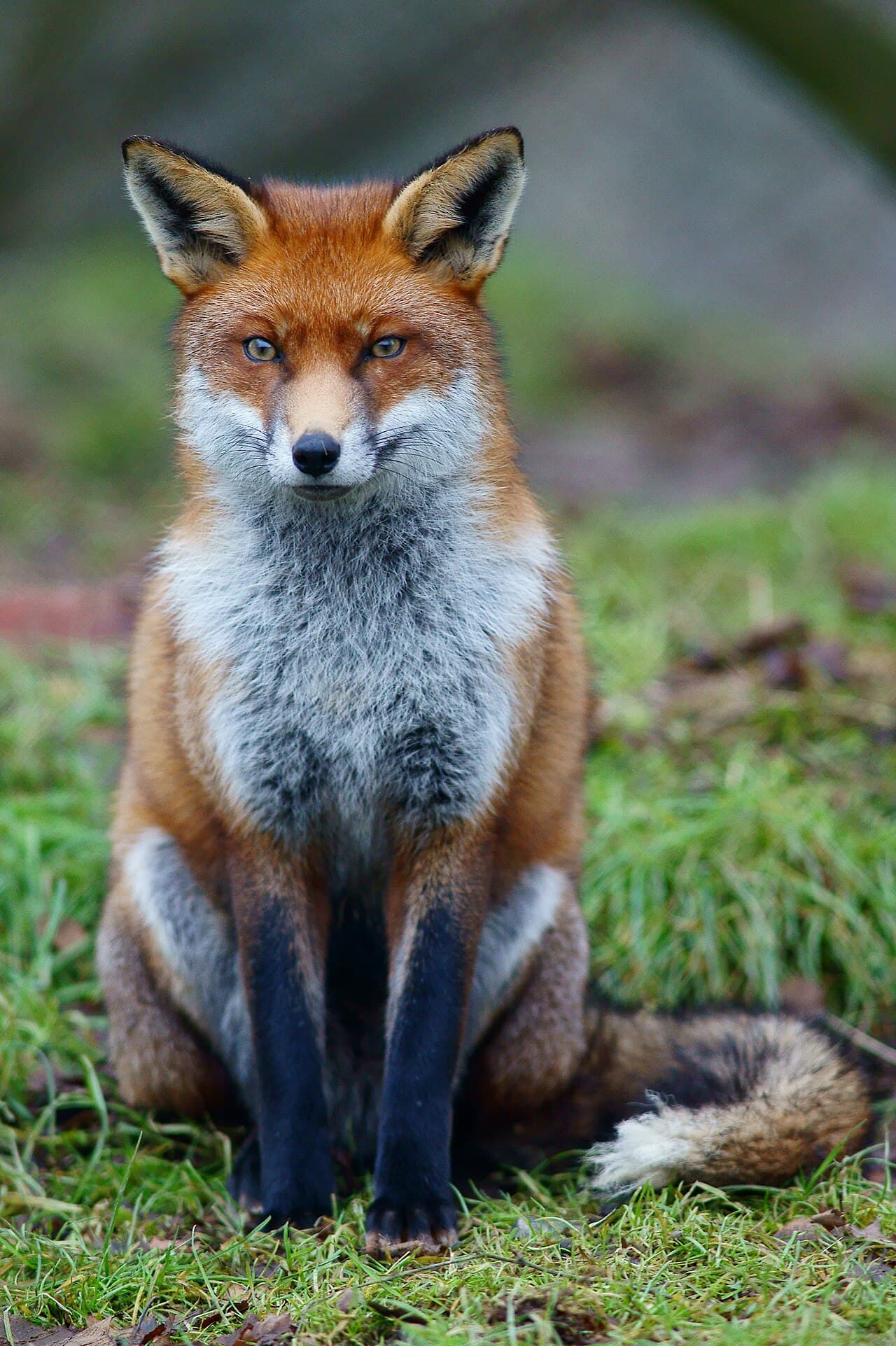
Red fox
Vulpes vulpes
CompareGrey wolf vs Red fox
Common questions
Answered only where our data holds the answer.
Where does the grey wolf live?
The grey wolf has openly licensed sighting records from 168 countries on GBIF. The most records come from Australia, France, Switzerland, Norway and United States. These are recorded sightings, not a definitive range.
Is the grey wolf endangered?
The grey wolf is listed as Least Concern on the IUCN Red List, meaning it is not currently at risk of extinction.
What does the grey wolf eat?
Its recorded foods include Poponejo, Lepus europaeus, moose, Bison, carrion and Rangifer tarandus, among 36 on record.
How long is the grey wolf pregnant?
The recorded gestation period is 62 days.
What kind of animal is the grey wolf?
The grey wolf (Canis lupus) belongs to the family Canidae in the order Carnivora.
Sources and how to cite this page
Data as of 2026-11-11. How this page is put together.
- GBIF Backbone Taxonomy · CC BY 4.0 · live API 2026-11-11
GBIF Secretariat. GBIF Backbone Taxonomy. Checklist dataset https://doi.org/10.15468/39omei accessed via GBIF.org. - Wikidata · CC0 1.0 · live API 2026-11-11
Wikidata contributors. Wikidata, the free knowledge base. - GBIF occurrence aggregates (CC0 and CC BY records only) · CC BY 4.0 · live API 2026-11-11
GBIF.org occurrence search, country facet counts restricted to CC0 1.0 and CC BY 4.0 records. - Wikimedia Commons · Per file · live API 2026-11-11
Wikimedia Commons contributors. Licence and creator recorded per file. - English Wikipedia · CC BY-SA 4.0 · live API 2026-11-11
Wikipedia contributors. Wikipedia, The Free Encyclopedia.
Embed a card for this animal on your own site
Copy this code. The card shows the photo with its credit, key facts and a link back to this page.
CreatureData. (2026). Grey wolf (Canis lupus). Retrieved from https://creaturedata.com/animals/grey-wolf
“Grey wolf (Canis lupus).” CreatureData, 2026, https://creaturedata.com/animals/grey-wolf.
@misc{grey_wolf_2026,
  title = {Grey wolf (Canis lupus)},
  author = {{CreatureData}},
  year = {2026},
  url = {https://creaturedata.com/animals/grey-wolf},
  note = {Data as of 2026-11-11}
}