Tiger
Panthera tigris (Linnaeus, 1758)
The tiger (Panthera tigris) is a species in the family Felidae, order Carnivora. Recorded adults weigh 120 kg to 180 kg. It has been recorded in 35 countries, most often in India, Indonesia and Germany. Its IUCN Red List status is Endangered.
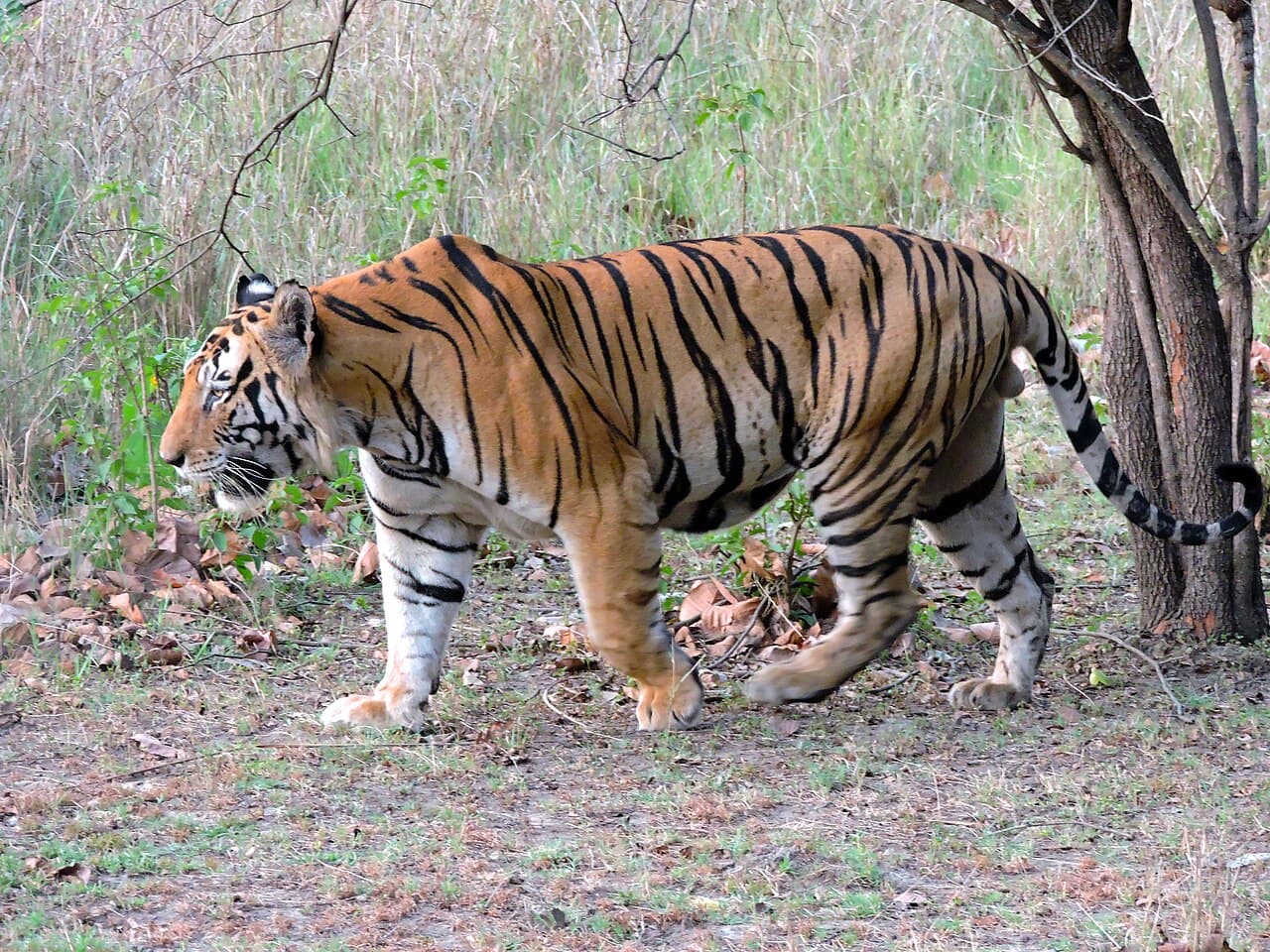
Quick facts about the tiger
- Weight
- 120 kg – 180 kgsrc for Weight
- Length
- Not recorded
- Lifespan
- Not recorded
- Main food
- ungulate, monkey, rabbits and hares, fishsrc for Main food
- Habitat
- forest, savanna, shrubland, grassland, wetland, coastal wetlandsrc for Habitat
- Gestation
- 107 dayssrc for Gestation
- Young per litter or clutch
- 2.5src for Young per litter or clutch
- Conservation status
- Endangered (IUCN)src for Conservation status
- Recorded in
- 35 countriessrc for Recorded in
Photos of the tiger
Only freely licensed photos are shown. Each carries its creator and licence.

Where does the tiger live?
Countries with openly licensed sighting records on GBIF. This shows where the species has been recorded, including zoos and introduced populations. It is not a definitive range.
The tiger has been recorded in 35 countries, from 4,400 records.
- None on record
- 1–9
- 10–99
- 100–999
- 1,000+
The same figures as a list, most records first
- India2,930
- Indonesia329
- Germany291
- Nepal212
- Japan172
- United States118
- China112
- Malaysia39
- Laos24
- Thailand24
- Vietnam21
- Russia20
- Denmark18
- Brazil14
- Myanmar (Burma)14
- Netherlands12
- Namibia8
- South Korea7
- Bangladesh5
- South Africa4
- Bhutan3
- Kenya3
- Czechia2
- Estonia2
- France2
- United Kingdom2
- Iran2
- Cambodia2
- Sweden2
- Austria1
- Canada1
- Kazakhstan1
- Mongolia1
- Malawi1
- Eswatini1
What is the tiger?
The tiger (Panthera tigris) is a large cat and a member of the genus Panthera native to Asia. It has a powerful, muscular body with a large head and paws, a long tail and orange fur that fades to white in parts, with black, mostly vertical stripes. It is traditionally classified into nine subspecies, though some recognise only two subspecies, the mainland Asian tiger and the Sunda Islands tiger.
Throughout its range, it inhabits mainly forests, from coniferous and temperate broadleaf and mixed forests in the Russian Far East and Northeast China to tropical and subtropical moist broadleaf forests on the Indian subcontinent and Southeast Asia. The tiger is an apex predator and preys mainly on hooved mammals, which it takes by ambush. It lives a mostly solitary life and defends its home range from individuals of the same sex. The range of a male tiger overlaps with that of multiple females with whom he mates. Females give birth to usually two or three cubs that stay with their mother for about two years. When becoming independent, they leave their mother's home range and establish their own.
Since the early 20th century, tiger populations have lost at least 93% of their historic range and are locally extinct in West and Central Asia, in large areas of China and on the islands of Java and Bali. Today, the tiger's range is severely fragmented. It is listed as Endangered on the IUCN Red List, as its range is thought to have declined by 53% to 68% since the late 1990s. Major threats to tigers are habitat destruction and fragmentation due to deforestation, poaching for fur and the illegal trade of body parts for medicinal purposes. Tigers are also victims of human–wildlife conflict as they attack and prey on livestock in areas where natural prey is scarce. The tiger is legally protected in all range countries. National conservation measures consist of action plans, anti-poaching patrols and schemes for monitoring tiger populations. In several range countries, wildlife corridors have been established and tiger reintroduction is planned.
The tiger is among the most popular of the world's charismatic megafauna. It has been kept in captivity since ancient times and has been trained to perform in circuses and other entertainment shows. The tiger featured prominently in the ancient mythology and folklore of cultures throughout its historic range and has continued to appear in culture worldwide.
Wikipedia contributors, “Tiger”, Wikipedia (revision 1383988621), retrieved 2026-11-11. Shared under CC BY-SA 4.0; this block is kept separate from our own text.
Is the tiger endangered?
The tiger is listed as Endangered on the IUCN Red List: it faces a very high risk of extinction in the wild.
- LCLeast Concern
- NTNear Threatened
- VUVulnerable
- ENEndangered
- CRCritically Endangered
- EWExtinct in the Wild
- EXExtinct
Category via Wikidata (CC0). Find the full assessment on the IUCN Red List. See all Endangered species.
How is the tiger classified?
- kingdomAnimalia
- phylumChordata
- classMammalia
- orderCarnivora
- familyFelidae
- genusPanthera
- SpeciesPanthera tigris (Linnaeus, 1758)
Synonyms Felis tigris
Names in other languages (13)
- tigreFrench
- tigreSpanish
- tigrePortuguese
- tigreItalian
- tijgerDutch
- tigerSwedish
- トラJapanese
- 虎Chinese
- ببرArabic
- बाघHindi
- Chui miliaSwahili
- тигрRussian
- البَبْرArabic
GBIFWikidataWikipediaNCBI TaxonomyITISEncyclopedia of LifeiNaturalist
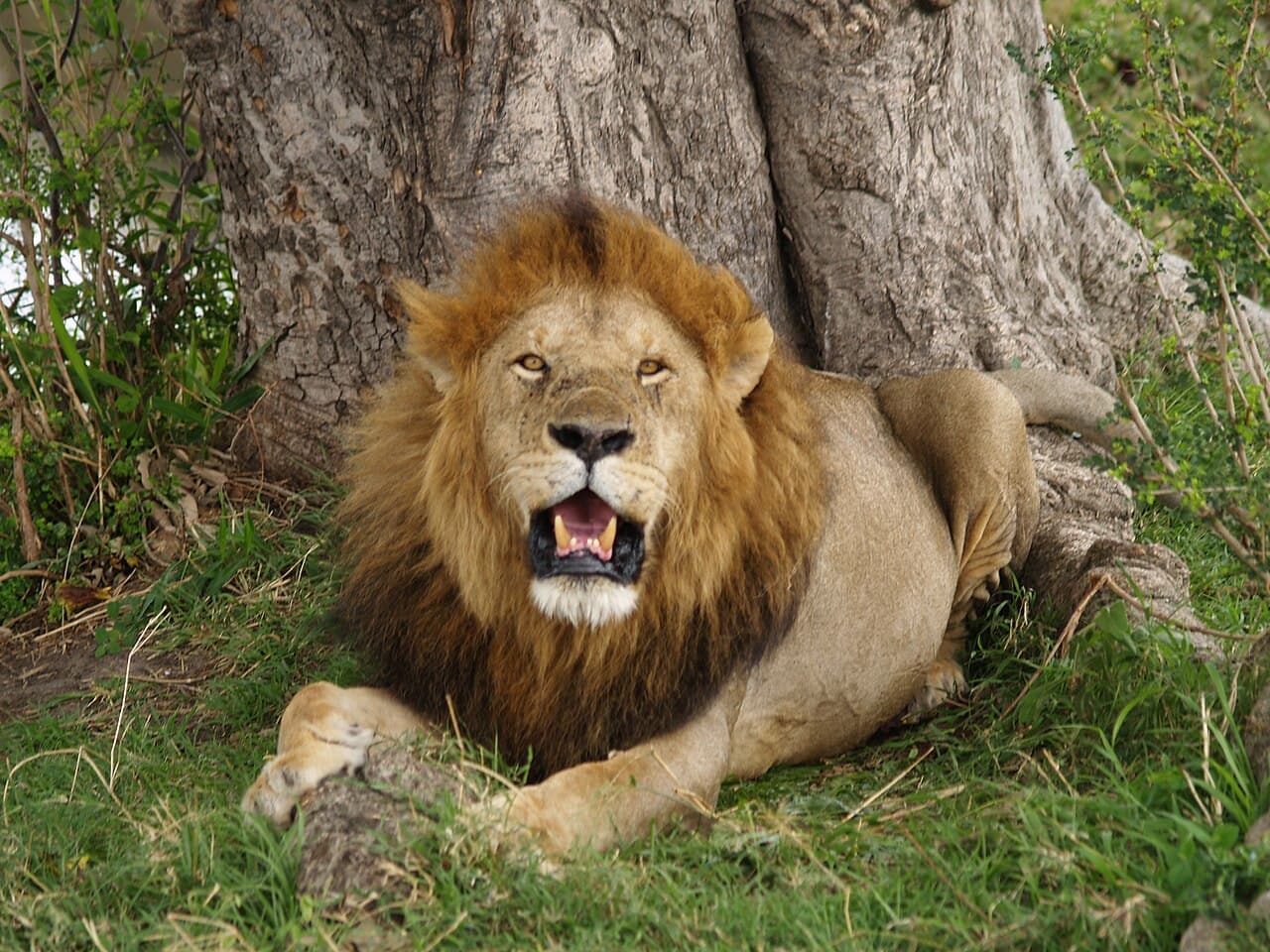
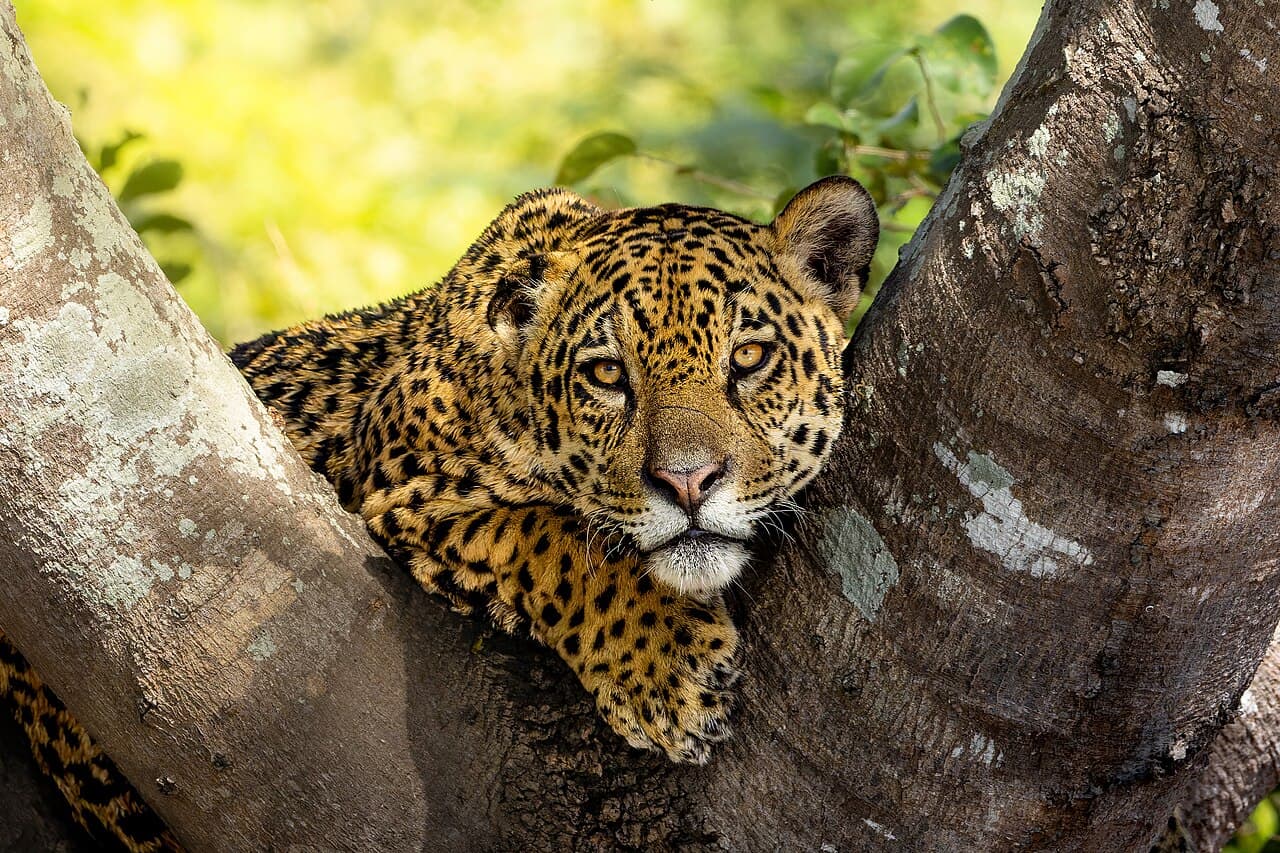
Relatives of the tiger
Other species in the same genus Panthera.


Common questions
Answered only where our data holds the answer.
How big is the tiger?
An adult tiger weighs 120 kg – 180 kg, according to values recorded on Wikidata.
Where does the tiger live?
The tiger has openly licensed sighting records from 35 countries on GBIF. The most records come from India, Indonesia, Germany, Nepal and Japan. These are recorded sightings, not a definitive range.
Is the tiger endangered?
The tiger is listed as Endangered on the IUCN Red List, meaning it faces a very high risk of extinction in the wild.
What does the tiger eat?
Its recorded main food is ungulate, monkey, rabbits and hares and fish.
How long is the tiger pregnant?
The recorded gestation period is 107 days.
What kind of animal is the tiger?
The tiger (Panthera tigris) belongs to the family Felidae in the order Carnivora.
Sources and how to cite this page
Data as of 2026-11-11. How this page is put together.
- GBIF Backbone Taxonomy · CC BY 4.0 · live API 2026-11-11
GBIF Secretariat. GBIF Backbone Taxonomy. Checklist dataset https://doi.org/10.15468/39omei accessed via GBIF.org. - Wikidata · CC0 1.0 · live API 2026-11-11
Wikidata contributors. Wikidata, the free knowledge base. - GBIF occurrence aggregates (CC0 and CC BY records only) · CC BY 4.0 · live API 2026-11-11
GBIF.org occurrence search, country facet counts restricted to CC0 1.0 and CC BY 4.0 records. - Wikimedia Commons · Per file · live API 2026-11-11
Wikimedia Commons contributors. Licence and creator recorded per file. - English Wikipedia · CC BY-SA 4.0 · live API 2026-11-11
Wikipedia contributors. Wikipedia, The Free Encyclopedia.
Embed a card for this animal on your own site
Copy this code. The card shows the photo with its credit, key facts and a link back to this page.
CreatureData. (2026). Tiger (Panthera tigris). Retrieved from https://creaturedata.com/animals/tiger
“Tiger (Panthera tigris).” CreatureData, 2026, https://creaturedata.com/animals/tiger.
@misc{tiger_2026,
  title = {Tiger (Panthera tigris)},
  author = {{CreatureData}},
  year = {2026},
  url = {https://creaturedata.com/animals/tiger},
  note = {Data as of 2026-11-11}
}