Leopard
Panthera pardus (Linnaeus, 1758)
The leopard (Panthera pardus) is a species in the family Felidae, order Carnivora. It has been recorded in 79 countries, most often in India, Zambia and Nepal. Its IUCN Red List status is Vulnerable.


Quick facts about the leopard
- Weight
- Not recorded
- Length
- Not recorded
- Lifespan
- Not recorded
- Main food
- impala, Eudorcas thomsonii, common warthog, Papio, Sylvicapra grimmia, Günther's dik-dik and 76 moresrc for Main food
- Habitat
- shrubland, forestsrc for Habitat
- Gestation
- 91 dayssrc for Gestation
- Young per litter or clutch
- 5src for Young per litter or clutch
- Conservation status
- Vulnerable (IUCN)src for Conservation status
- Recorded in
- 79 countriessrc for Recorded in
Where does the leopard live?
Countries with openly licensed sighting records on GBIF. This shows where the species has been recorded, including zoos and introduced populations. It is not a definitive range.
The leopard has been recorded in 79 countries, from 4,273 records.
- None on record
- 1–9
- 10–99
- 100–999
- 1,000+
The same figures as a list, most records first
- India671
- Zambia557
- Nepal448
- South Africa392
- Germany319
- Kenya275
- Tanzania218
- Indonesia121
- Botswana120
- Sri Lanka101
- Congo - Kinshasa75
- Namibia75
- Israel73
- China69
- Cameroon59
- United States49
- Thailand48
- Pakistan45
- Iran44
- Uganda35
- Denmark32
- Zimbabwe30
- Central African Republic25
- Ethiopia25
- Malaysia25
- Angola24
- Cambodia24
- Côte d’Ivoire23
- Benin21
- Gabon20
- Sudan16
- Somalia16
- Liberia15
- Vietnam15
- Algeria12
- Sierra Leone12
- Mozambique11
- Myanmar (Burma)8
- Nigeria8
- Chad8
Show 39 more countries
- Burundi7
- Lebanon7
- Russia7
- Bhutan6
- Eritrea6
- Morocco6
- Afghanistan5
- France5
- Congo - Brazzaville4
- Ghana4
- Japan4
- Spain3
- South Korea3
- Laos3
- Malawi3
- Yemen3
- Bangladesh2
- Brazil2
- Egypt2
- Finland2
- Equatorial Guinea2
- Oman2
- Rwanda2
- Senegal2
- South Sudan2
- Türkiye2
- Belgium1
- Canada1
- Czechia1
- Estonia1
- United Kingdom1
- French Guiana1
- Guinea1
- Iraq1
- Jordan1
- Mali1
- Netherlands1
- Sweden1
- Syria1
What is the leopard?
The leopard (Panthera pardus) is one of the five extant cat species in the genus Panthera. It has a pale yellowish to dark golden fur with dark spots grouped in rosettes. Its body is slender and muscular, reaching a length of 92–183 cm (36–72 in) with a 66–102 cm (26–40 in) long tail and a shoulder height of 60–70 cm (24–28 in). Males typically weigh 30.9–72 kg (68–159 lb), and females 20.5–43 kg (45–95 lb).
The leopard was first described in 1758, and several subspecies were proposed in the 19th and 20th centuries. Today, eight subspecies are recognised in its wide range in Africa and Asia. It initially evolved in Africa during the Early Pleistocene, before migrating into Eurasia around the Early–Middle Pleistocene transition. Leopards were formerly present across Europe, but became extinct in the region at around the end of the Late Pleistocene-early Holocene.
The leopard is adapted to a variety of habitats ranging from rainforest to steppe, including arid and montane areas. It is an opportunistic predator, hunting mostly hooved mammals and primates. It relies on its spotted pattern for camouflage as it stalks and ambushes its prey, which it sometimes drags up a tree. It is a solitary animal outside the mating season and when raising cubs. Females usually give birth to a litter of 2–4 cubs once in 15–24 months. Both male and female leopards typically reach sexual maturity at the age 2–2.5 years.
Listed as Vulnerable on the IUCN Red List, leopard populations are currently threatened by habitat loss and fragmentation, and are declining in large parts of the global range. Leopards have had cultural roles in Ancient Greece, West Africa and modern Western culture. Leopard skins are popular in fashion.
Wikipedia contributors, “Leopard”, Wikipedia (revision 1383314173), retrieved 2026-11-11. Shared under CC BY-SA 4.0; this block is kept separate from our own text.
Is the leopard endangered?
The leopard is listed as Vulnerable on the IUCN Red List: it faces a high risk of extinction in the wild.
- LCLeast Concern
- NTNear Threatened
- VUVulnerable
- ENEndangered
- CRCritically Endangered
- EWExtinct in the Wild
- EXExtinct
Category via Wikidata (CC0). Find the full assessment on the IUCN Red List. See all Vulnerable species.
How is the leopard classified?
- kingdomAnimalia
- phylumChordata
- classMammalia
- orderCarnivora
- familyFelidae
- genusPanthera
- SpeciesPanthera pardus (Linnaeus, 1758)
Synonyms Felis pardus
Names in other languages (15)
- léopardFrench
- leopardoSpanish
- leopardoPortuguese
- leopardoItalian
- luipaardDutch
- leopardSwedish
- ヒョウJapanese
- 豹Chinese
- نمرArabic
- तेन्दुआHindi
- ChuiSwahili
- леопардRussian
- PanteraSpanish
- PanthèreFrench
- 金钱豹Chinese
GBIFWikidataWikipediaNCBI TaxonomyITISEncyclopedia of LifeiNaturalist
Relatives of the leopard
Other species in the same genus Panthera.
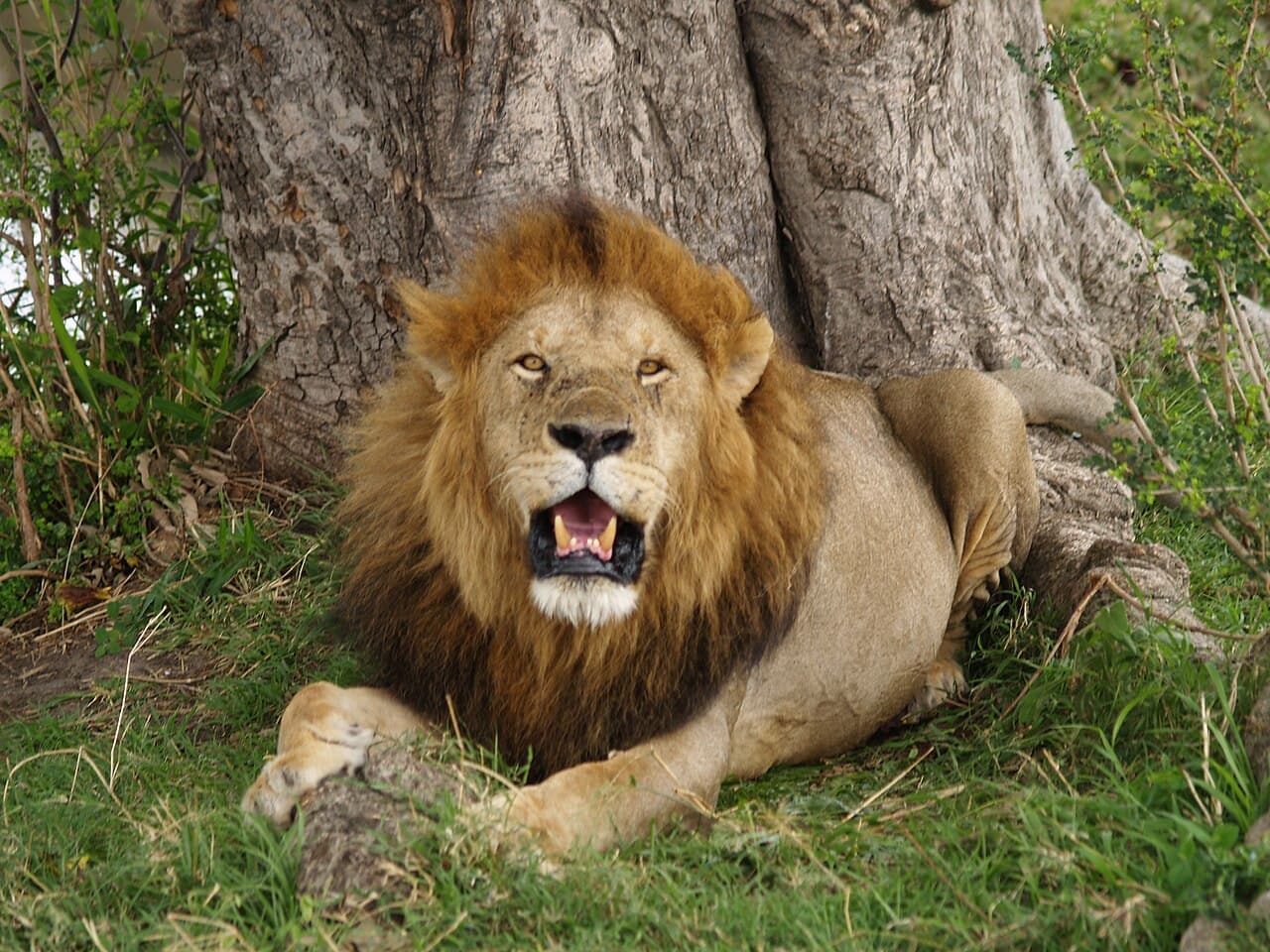
Lion
Panthera leo
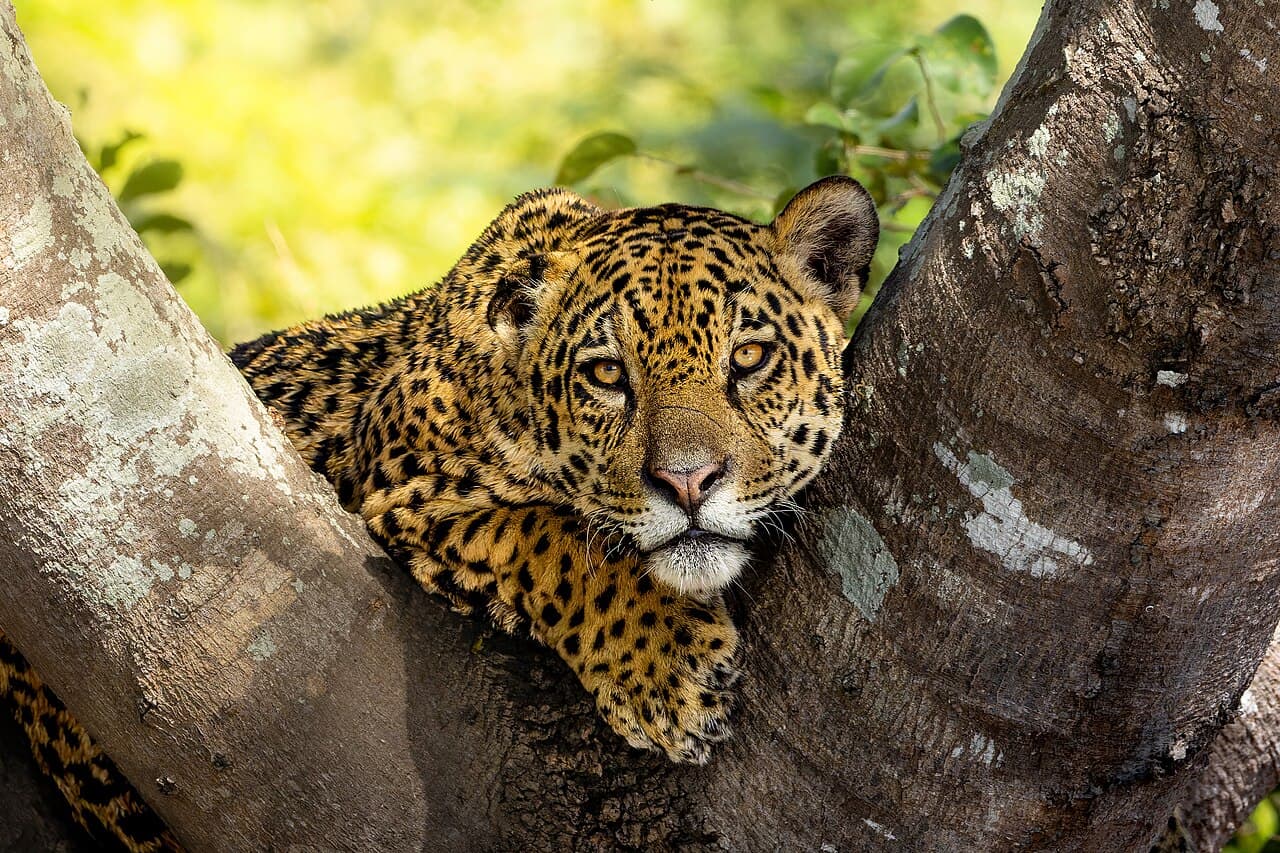
Jaguar
Panthera onca
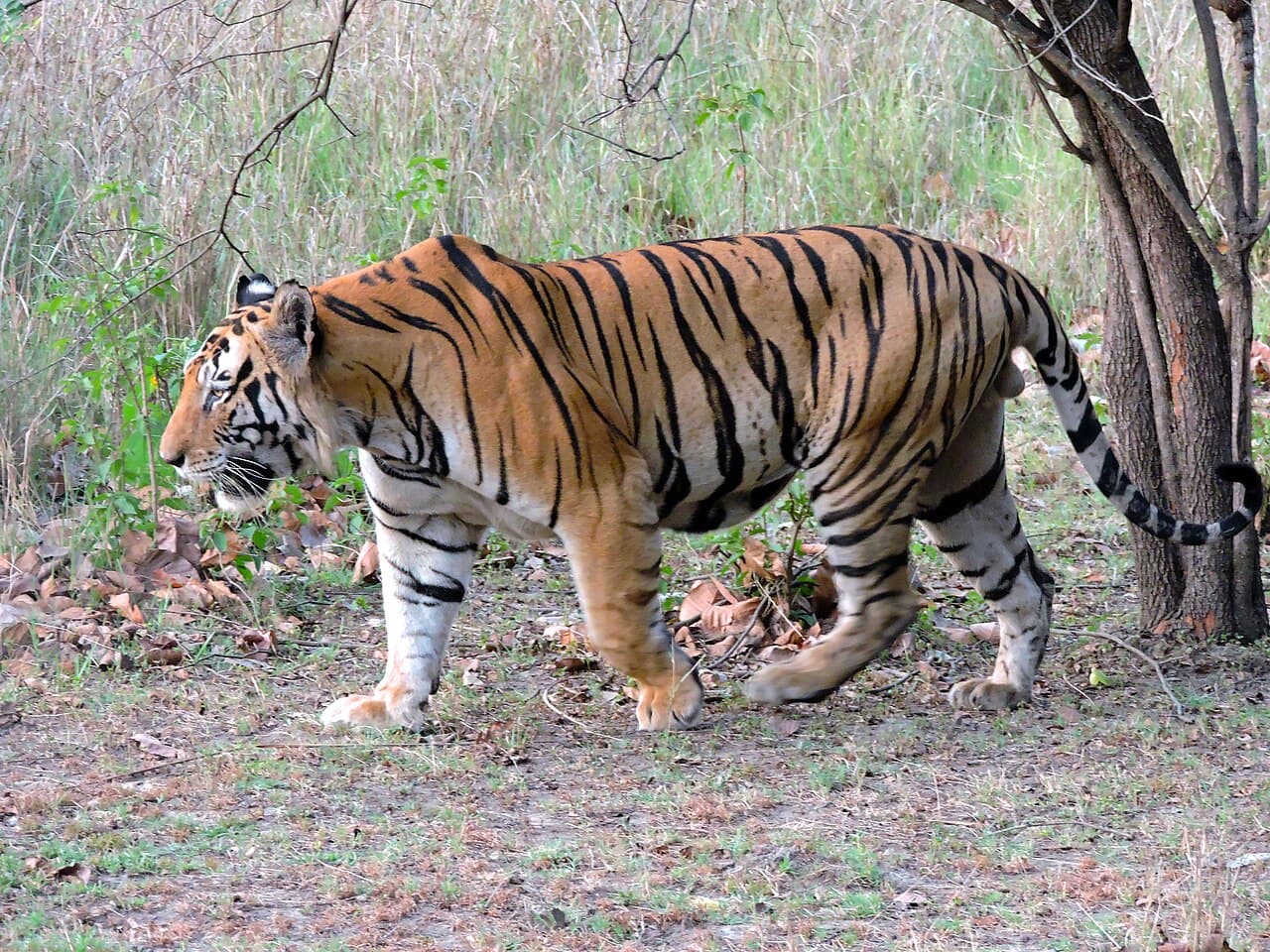
Tiger
Panthera tigris
CompareLeopard vs JaguarLeopard vs CheetahLeopard vs LionLeopard vs Tiger
Common questions
Answered only where our data holds the answer.
Where does the leopard live?
The leopard has openly licensed sighting records from 79 countries on GBIF. The most records come from India, Zambia, Nepal, South Africa and Germany. These are recorded sightings, not a definitive range.
Is the leopard endangered?
The leopard is listed as Vulnerable on the IUCN Red List, meaning it faces a high risk of extinction in the wild.
What does the leopard eat?
Its recorded foods include impala, Eudorcas thomsonii, common warthog, Papio, Sylvicapra grimmia and Günther's dik-dik, among 82 on record.
How long is the leopard pregnant?
The recorded gestation period is 91 days.
What kind of animal is the leopard?
The leopard (Panthera pardus) belongs to the family Felidae in the order Carnivora.
Sources and how to cite this page
Data as of 2026-11-11. How this page is put together.
- GBIF Backbone Taxonomy · CC BY 4.0 · live API 2026-11-11
GBIF Secretariat. GBIF Backbone Taxonomy. Checklist dataset https://doi.org/10.15468/39omei accessed via GBIF.org. - Wikidata · CC0 1.0 · live API 2026-11-11
Wikidata contributors. Wikidata, the free knowledge base. - GBIF occurrence aggregates (CC0 and CC BY records only) · CC BY 4.0 · live API 2026-11-11
GBIF.org occurrence search, country facet counts restricted to CC0 1.0 and CC BY 4.0 records. - Wikimedia Commons · Per file · live API 2026-11-11
Wikimedia Commons contributors. Licence and creator recorded per file. - English Wikipedia · CC BY-SA 4.0 · live API 2026-11-11
Wikipedia contributors. Wikipedia, The Free Encyclopedia.
Embed a card for this animal on your own site
Copy this code. The card shows the photo with its credit, key facts and a link back to this page.
CreatureData. (2026). Leopard (Panthera pardus). Retrieved from https://creaturedata.com/animals/leopard
“Leopard (Panthera pardus).” CreatureData, 2026, https://creaturedata.com/animals/leopard.
@misc{leopard_2026,
  title = {Leopard (Panthera pardus)},
  author = {{CreatureData}},
  year = {2026},
  url = {https://creaturedata.com/animals/leopard},
  note = {Data as of 2026-11-11}
}